
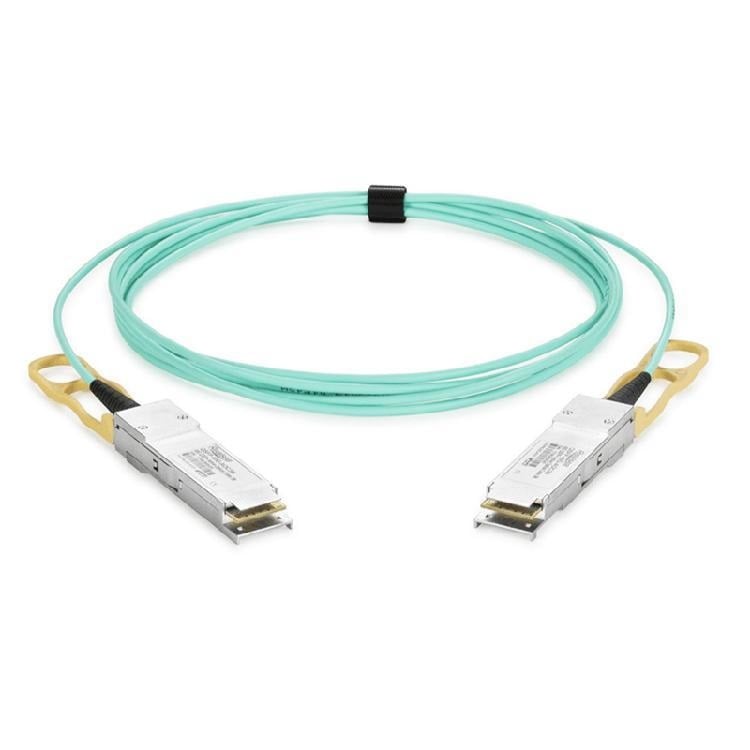
In modern data centers, the demand for high-speed, reliable, and energy-efficient connections has never been higher. As businesses increasingly rely on cloud computing, big data analytics, and high-performance applications, the network infrastructure that supports these operations must keep pace. One critical component that ensures optimal connectivity in these environments is the QSFP28 active optical cable. Understanding how to choose the right QSFP28 active optical cable for your data center can significantly improve performance, reduce latency, and enhance scalability.
Understanding QSFP28 Active Optical Cables
The QSFP28 active optical cable is a high-speed transceiver solution designed for 100 Gigabit Ethernet applications. Unlike passive cables, which rely solely on the physical copper or fiber medium, active optical cables (AOCs) integrate electrical-to-optical conversion components, allowing data to travel longer distances at higher speeds with lower power consumption. These cables are commonly used for short-reach connections between switches, servers, and storage systems within data centers.
Active optical cables are particularly beneficial for dense network architectures, as they reduce signal loss over long distances and provide greater flexibility in cable management. QSFP28 AOCs are backward-compatible with QSFP+ standards, ensuring that they can seamlessly integrate with existing 40GbE infrastructures while supporting future upgrades to 100GbE.
Key Factors to Consider When Choosing a QSFP28 Active Optical Cable
Selecting the right QSFP28 active optical cable involves considering several technical and operational factors. Here are the most important aspects to evaluate:
Transmission Distance
One of the primary considerations is the distance over which the cable needs to transmit data. QSFP28 AOCs are available in various lengths, typically ranging from 1 meter to 100 meters. Shorter cables are ideal for top-of-rack (ToR) connections, while longer cables can support mid-range connections between different racks or rows in a data center. Fiber-mart provides a wide range of QSFP28 AOCs suitable for both short-reach and extended-reach applications, ensuring you can find a cable that matches your infrastructure needs.
Compatibility and Port Type
Compatibility is critical when deploying QSFP28 active optical cables. These cables are designed for QSFP28 ports, but it’s important to verify that your network devices support active optical modules. Some older switches may only support passive DACs or have specific firmware requirements for AOCs. Fiber-mart ensures that all QSFP28 active optical cables meet industry standards, providing interoperability with leading network switches, routers, and servers.
Data Rate and Performance
QSFP28 active optical cables are engineered to handle 100Gbps data rates, but their performance can vary based on the cable quality, distance, and environmental factors. When choosing a QSFP28 AOC, look for cables that provide low bit error rates (BER) and high signal integrity. High-quality cables from Fiber-mart undergo rigorous testing to ensure stable performance under demanding data center conditions.
Power Consumption
Active optical cables consume more power than passive copper cables due to their built-in transceivers, but the difference is often offset by the reduction in heat and increased signal reliability. Lower power consumption not only reduces operational costs but also minimizes the cooling requirements of your data center. Fiber-mart offers energy-efficient QSFP28 active optical cables designed to balance high-speed performance with reduced power usage.
Reliability and Durability
Data centers operate 24/7, making reliability and durability critical factors when selecting a QSFP28 AOC. Look for cables with robust connectors, strain relief, and protective housings that can withstand repeated plugging and unplugging. Fiber-mart QSFP28 active optical cables are built with high-quality materials to ensure long-term performance, even in high-density deployments where cables are frequently handled.
Cost Considerations
While QSFP28 active optical cables are generally more expensive than passive copper alternatives, the benefits in terms of speed, reach, and reliability often justify the investment. Consider the total cost of ownership, including potential savings in energy and maintenance. Fiber-mart provides competitive pricing on QSFP28 AOCs, making it easier to upgrade your network infrastructure without exceeding budget constraints.
Advantages of Using QSFP28 Active Optical Cables
Deploying QSFP28 active optical cables in your data center offers several key advantages:
- Extended Reach: Unlike passive cables, active optical cables can transmit data over longer distances without significant signal degradation. This is particularly valuable in large-scale data centers where equipment racks are spread across multiple rows.
- High Bandwidth: QSFP28 AOCs support 100Gbps data rates, enabling faster data transfers, reduced latency, and improved application performance.
- Flexibility in Design: With their thinner and lighter cables, QSFP28 AOCs allow for easier cable management and airflow optimization, which is crucial in high-density environments.
- Lower Latency: Active optical cables provide cleaner signals with minimal interference, resulting in reduced latency for critical applications like financial transactions, cloud services, and AI workloads.
- Scalability: QSFP28 active optical cables make it easier to scale your network as your data center grows, supporting future upgrades without requiring a complete overhaul of your cabling infrastructure.
Fiber-mart: Your Trusted Source for QSFP28 Active Optical Cables
When it comes to purchasing high-quality QSFP28 active optical cables, Fiber-mart stands out as a reliable supplier. Fiber-mart specializes in providing cables that meet stringent industry standards, ensuring maximum compatibility, performance, and durability. They offer a comprehensive range of QSFP28 AOCs in various lengths and specifications, making it easier for data center managers to find the right solution for their unique networking needs.
Fiber-mart’s focus on quality and customer support ensures that each cable is thoroughly tested for performance and reliability. Additionally, their knowledgeable team can provide guidance on selecting the right cable based on your network topology, distance requirements, and bandwidth needs.
Best Practices for Deploying QSFP28 Active Optical Cables
To maximize the benefits of QSFP28 active optical cables, follow these deployment best practices:
- Plan Cable Routes Carefully: Avoid sharp bends and excessive tension that could damage the cable. Use proper cable management trays and racks to maintain organization.
- Verify Compatibility: Always confirm that your network devices support QSFP28 active optical modules before installation.
- Label and Document: Keep accurate records of cable lengths, port connections, and routing paths to simplify maintenance and future upgrades.
- Test Connections: Perform signal integrity tests after installation to ensure each link meets the required data rate and performance standards.
- Monitor Performance: Regularly monitor network performance and inspect cables for signs of wear or damage to prevent unexpected downtime.
Conclusion
Selecting the right QSFP28 active optical cable is essential for modern data centers that demand high-speed, reliable, and scalable network connections. By considering factors such as transmission distance, compatibility, performance, power consumption, and durability, data center managers can make informed decisions that enhance operational efficiency and future-proof their infrastructure.
With Fiber-mart as your trusted supplier, you can access high-quality QSFP28 active optical cables that deliver consistent performance, flexibility, and long-term reliability. Investing in the right AOC solution ensures your data center is prepared to meet the growing demands of today’s digital landscape while maintaining optimal network efficiency.
