
The United Kingdom is one of the influential trading economies of the worldwide marketplace at present. Financial services, manufacturing, and technological innovation have been promoting trade integrity. The diversified economy is backed up by industries such as pharmaceuticals, automotive, aerospace, machinery, and electronics, which have made the country one of the largest importers and exporters worldwide. UK Import Data have been working as a beneficial tool for business authorities because the data set works as a symbolic feature of the globally increasing demand for essentials. The shipment-level customs intelligence enables businesses to identify verified buyers and suppliers, evaluate supplier performance, analyse competitor strategies, and monitor pricing trends.
Companies operating across multiple industries can go through the customs records to make informed sourcing and investment decisions. The United Kingdom Customs Data reported that the nation has been playing a significant role in facilitating global supply chains. The UK has been maintaining strong trade relationships with the United States, Germany, China, the Netherlands, France, Ireland, Belgium, and other Commonwealth nations. The continuous government investment in digital trade infrastructure, renewable energy, and advanced manufacturing has enhanced global trade performance. The diversified export portfolio and the range of sectors supported by the government authorities, from pharmaceuticals and machinery to aerospace equipment, have reduced the dependence of the economy on the individual sector for its overall growth rate. The government initiatives supporting export diversification and industrial innovation have created new opportunities for businesses seeking international expansion.
THE COMPREHENSIVE OVERVIEW OF UK IMPORTS
The United Kingdom has been sourcing different consumer-demand essentials from foreign authorities, which is mainly dominated by the healthcare sector, consumer market, construction industry, and advanced manufacturing ecosystem. The high domestic demand and the sophisticated industrial operations have promoted the economic development of the nation. Electrical machinery, industrial equipment, vehicles, automotive components, and pharmaceuticals are the top imported variants of the country. Says UK Customs Trade Data
The United States, China, Germany, the Netherlands, France, and Belgium are the top import partners. The UK Import Trade Data has been providing valuable shipment-level intelligence, which promotes trade integrity with the product valuation, pricing trends, and logistic movements. Businesses utilizing the information can evaluate supplier reliability and identify cost-effective sourcing. The healthcare industry has been further supporting significant imports of diagnostic equipment, laboratory instruments, and advanced medical devices sourced from foreign authorities. The increasing investment in industrial automation and smart manufacturing has promoted the import of robotics, semiconductors, and other equipment. The renewable energy sector is also creating demand for wind turbine components and solar panels with sustainable energy technologies. The digital transformation has been further supporting the import of cloud infrastructure, networking equipment, and cybersecurity solutions.
THE EXPORT MARKET OVERVIEW OF THE UNITED KINGDOM
The UK has been continuously maintaining its role as one of the leading exporters, backed up by the highly diversified industrial base, technological innovation, and globally recognized brands. Different export categories, including pharmaceuticals, aerospace equipment, industrial machinery, and food products, have been maintaining the overall trade position of the United Kingdom. UK Export Data enables businesses to identify verified international buyers, monitor export performance, and analyse global demand patterns. The shipment-level customs intelligence helps exporters understand customer purchasing behaviour, seasonal demand fluctuations, and international pricing strategies.
The pharmaceutical and biotechnology industries have been continuously generating substantial export revenues mainly through innovative medicines and healthcare technologies. The UK’s aerospace sector is considered globally competitive because the export of aircraft engines and aviation components has been supporting the trade upgrade. The continuous investment in research and development, sustainable manufacturing, and digital trade has created significant opportunities for the UK’s international competitiveness. The policies encouraging innovation, international collaboration, and customs simplification will improve market access for British exporters.
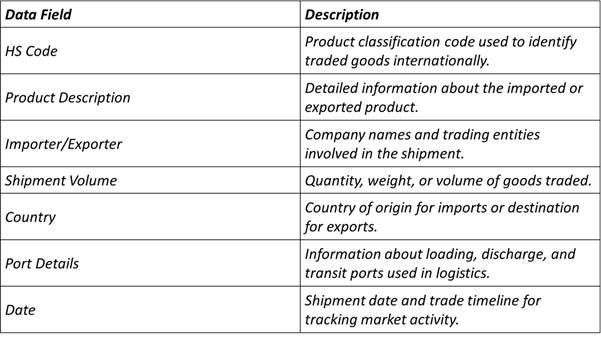
WHAT DETAILS ARE INCLUDED IN UK CUSTOMS DATA?
THE EFFECTIVENESS OF UK IMPORT-EXPORT DATA PROVIDERS IN BUSINESS GROWTH
UK import-export data providers have become a valuable tool for business authorities looking for service expansion. Accurate customs intelligence enables businesses to understand changing market dynamics by identifying profitable opportunities across multiple industries. Import Globals, UK trade data are considered beneficial because the customs shipment-level intelligence helps the authorities gain required access to the verified importer and exporter databases.
Companies trying to be progressive can properly identify the genuine buyers and monitor competitor activities to get accurate customs intelligence. Reliable access to trade data overall reduces the uncertainty of trade while supporting strategic planning. The availability of shipment-level intelligence regarding the specific resource essentials of the country improves lead generation and optimization of procurement strategies.
HOW DOES UK IMPORT-EXPORT DATA SUPPORT BUSINESS GROWTH?
UK import-export data has been considered an indispensable tool for business authorities because it helps beginner traders achieve sustainable growth in international markets. The shipment-level customs intelligence helps businesses make informed decisions with a reduction of trade risk and identification of profitable opportunities. Below are the factors that explain why UK import-export data support business growth.
- Identification of verified buyers and suppliers – Businesses trying to be progressive can properly identify the genuine importers and exporters over a targeted category. It overall allows the companies to connect with reliable trading partners while understanding the procurement patterns.
- Competitor shipment monitoring – The UK trade data will enable businesses to properly monitor competitor shipment volumes. The analysis of the trading activities will help the organizations stay updated with marketing strategies and identify new business opportunities.
- Supply chain optimization – The UK import customs data will help businesses evaluate supplier reliability, delivery performance, and sourcing cost. It will allow organizations to optimize procurement strategies with a reduction in supply chain disruptions.
- Market expansion opportunities – The companies trying to be progressive can properly identify the emerging industries. UK trade statistics will allow the authorities to gain valuable insights into the changing market conditions with proper expansion of the conventional trade into new regions.
- Pricing and demand analysis – Businesses trying to be progressive can monitor the international pricing trends with an understanding of the purchasing behaviour using shipment-level customs intelligence. It will help businesses get detailed information while supporting better pricing strategies.
WHY IS UK SHIPMENT DATA CONSIDERED IMPORTANT FOR INTERNATIONAL TRADE ANALYSIS?
UK shipment data is considered essential for international trade analysis because it will help the authorities get complete visibility into cross-border commercial activities. The shipment-level databases will enable businesses to identify real-time trading partners. Manufacturers, exporters, importers, and logistics providers will be able to invest in different firms by utilizing UK shipment data to evaluate import volumes, export destinations, and supplier performance.
The detailed customs intelligence will help businesses monitor competitors’ shipments, understand supply chain resilience, and identify sourcing opportunities. The historical shipment records will further help the authorities support forecasting, market research, and long-term business planning. Global trade will be increasingly competitive with the reliable access of the authorities to accurate UK shipment data that enables them to take data-driven decisions.
THE FUTURE TRADE OUTLOOK OF UK TRADE INTELLIGENCE
The future of the United Kingdom’s trade intelligence will be more optimistic, supported by continuous investment in advanced manufacturing, renewable energy, and artificial intelligence. The government initiatives promoting free trade agreements and industrial diversification will strengthen the competitiveness of the country’s positioning. The adoption of smart technologies and digital supply chains will improve international trade efficiency.
The growing international demand for pharmaceuticals, aerospace equipment, and clean energy technologies will support the export growth rate of the United Kingdom; the imports of automation systems, semiconductors, industrial equipment, and next-generation technologies will facilitate domestic industrial expansion. The increasing use of customs intelligence and trade data will enable the businesses regarding identification of emerging opportunities, optimization of sourcing strategies, and the responsive nature of the country to the changing global market conditions. International commerce will be data-driven and will remain an essential tool for businesses looking for long-term global success.
Conclusion
The United Kingdom will continue to play a role as a leading trading economy, backed up by the diversified industrial base, advanced manufacturing capabilities, and technological innovation. The regular investment made by the government authorities in logistics infrastructure, renewable energy, and digital customs systems will significantly strengthen its positioning in global trade.
Businesses looking for expansion in an international manner can gain substantial competitive advantages. The shipment-level customs intelligence will enable organizations to identify buyers and evaluate suppliers, along with monitoring competitor activities. International trade will be more data-driven, mainly because of the vital role in helping businesses minimize risk and optimize supply chains.
CTA
Looking for an expansion in your import-export business? You have landed at the right platform. Import Globals specializes in providing comprehensive UK Trade Data. The accurate shipment-level intelligence will help businesses identify genuine buyers and suppliers, along with monitoring competitor activities. Subscribe to www.importglobals.com or email at info@importglobals.com to get reliable access to the latest UK trade insights to accelerate your business growth.
FAQs
Que –How does UK import-export data support business growth?
Ans -UK import-export data supports business growth via proper identification of buyers, supplier analysis, analysis of market demand, and development of effective market expansion strategies.
Que –What information is available in UK trade data?
Ans -UK trade data covers Importer names, Exporter names, Shipment date, HS Code, Product Details, quantity, values, pricing information, origin country, importing country & port details.
Que –How frequently is the UK trade data updated?
Ans -UK trade data is updated on a monthly basis.
Que –Why is UK shipment data important for market research?
Ans -UK shipment data is considered important for market research because it helps businesses analyse product demand and supplier performance.
Que –Where can businesses obtain detailed UK import data and UK customs data?
Ans –Visit www.importglobals.com or drop an email at info@importglobals.com for detailed access to UK import data and UK export data.
